HomeBusiness solar
Plants built around your load curve.
For factories, warehouses, institutions and commercial sites. Rooftop where the roof can carry it, ground-mount where the land makes more sense — engineered, built and maintained by the same team.
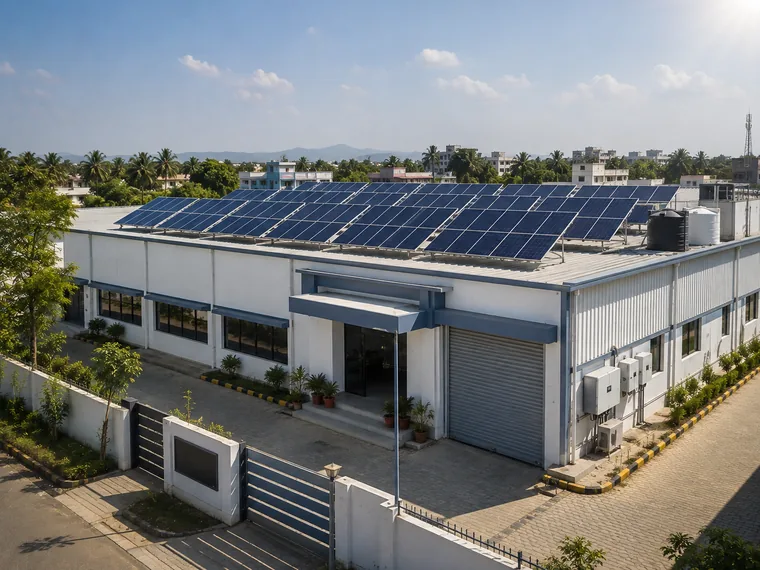
01 Rooftop or ground-mount
Two answers. The site decides which one, not the salesperson.
02 Capability
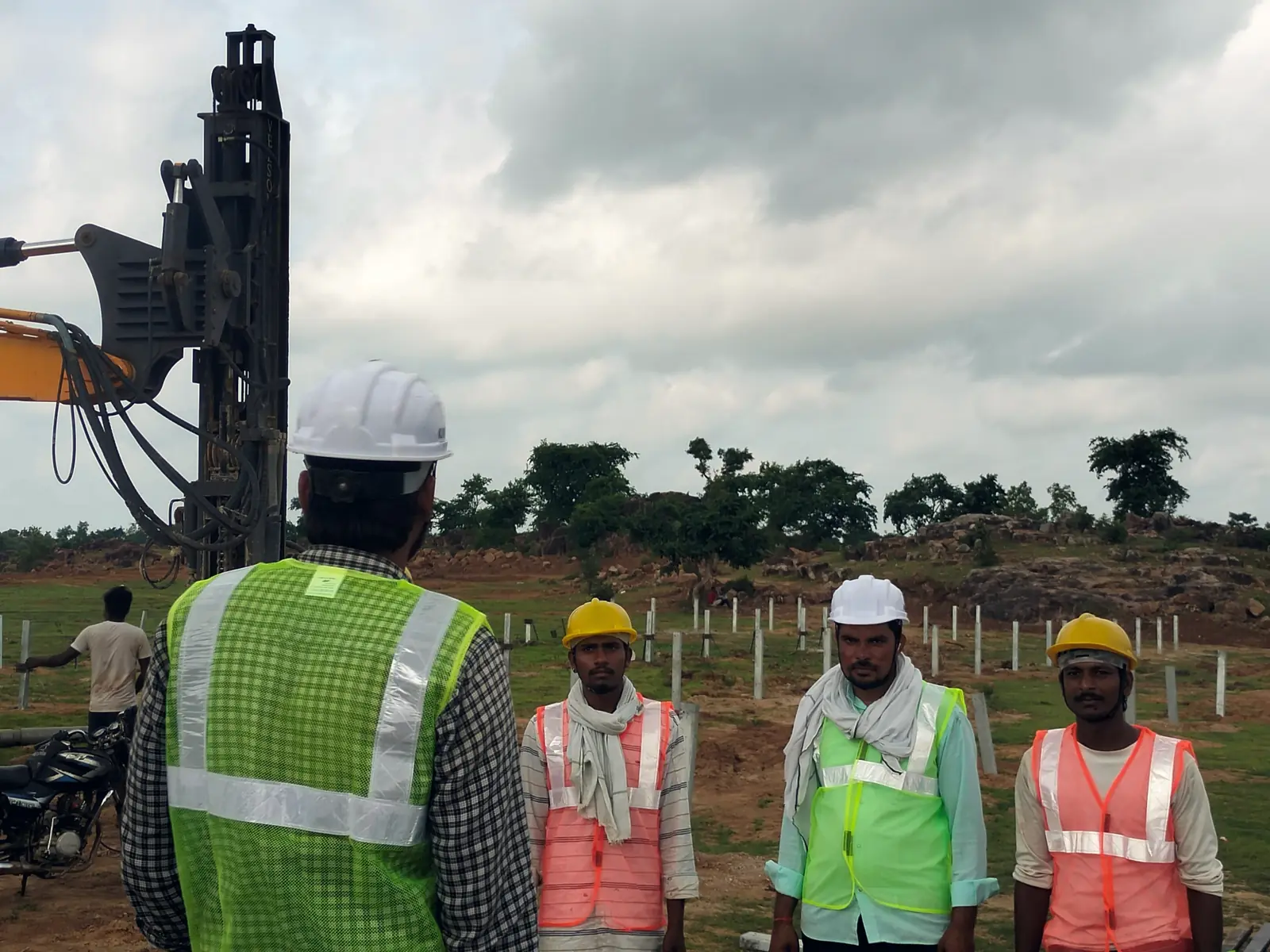
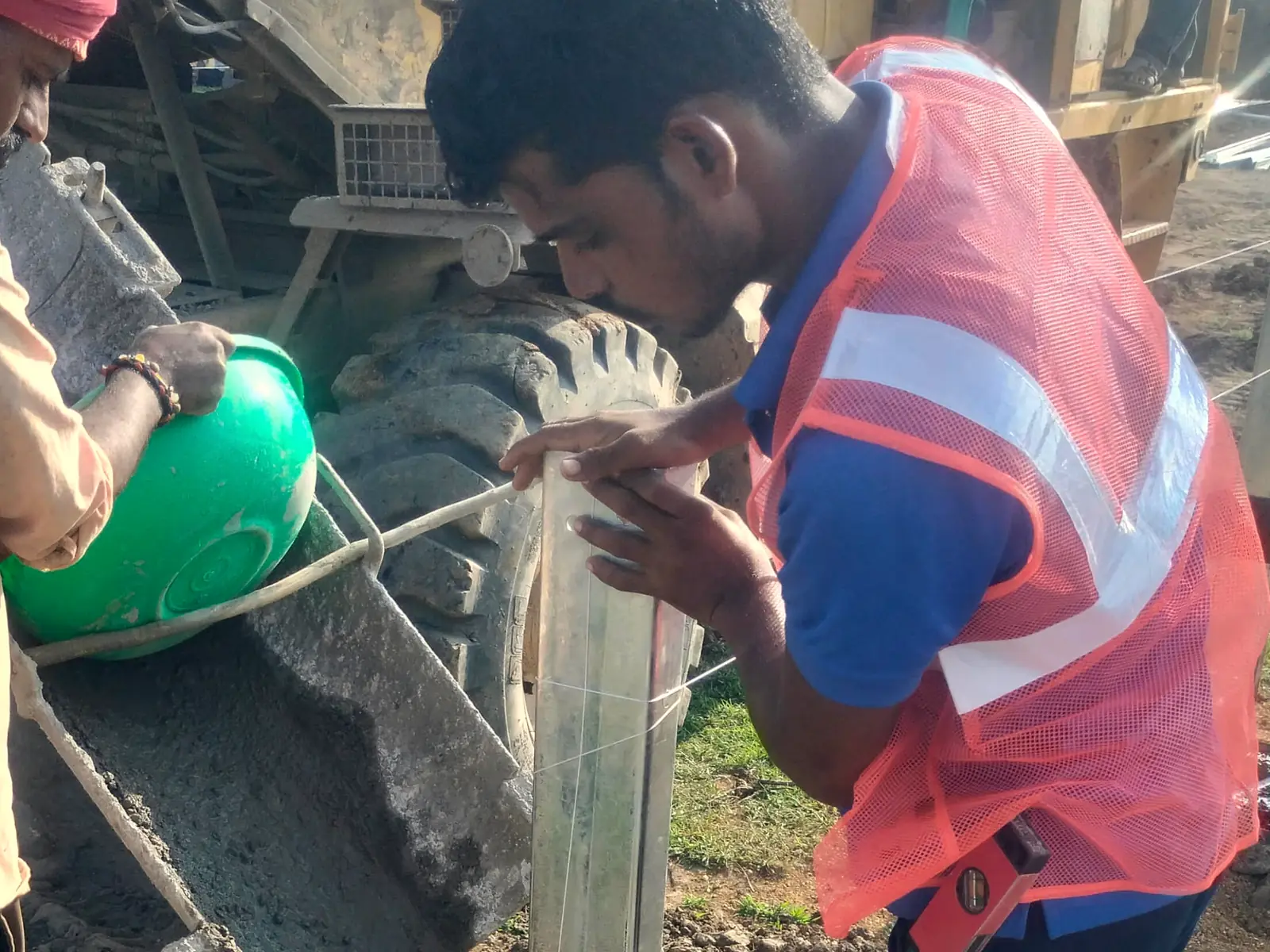
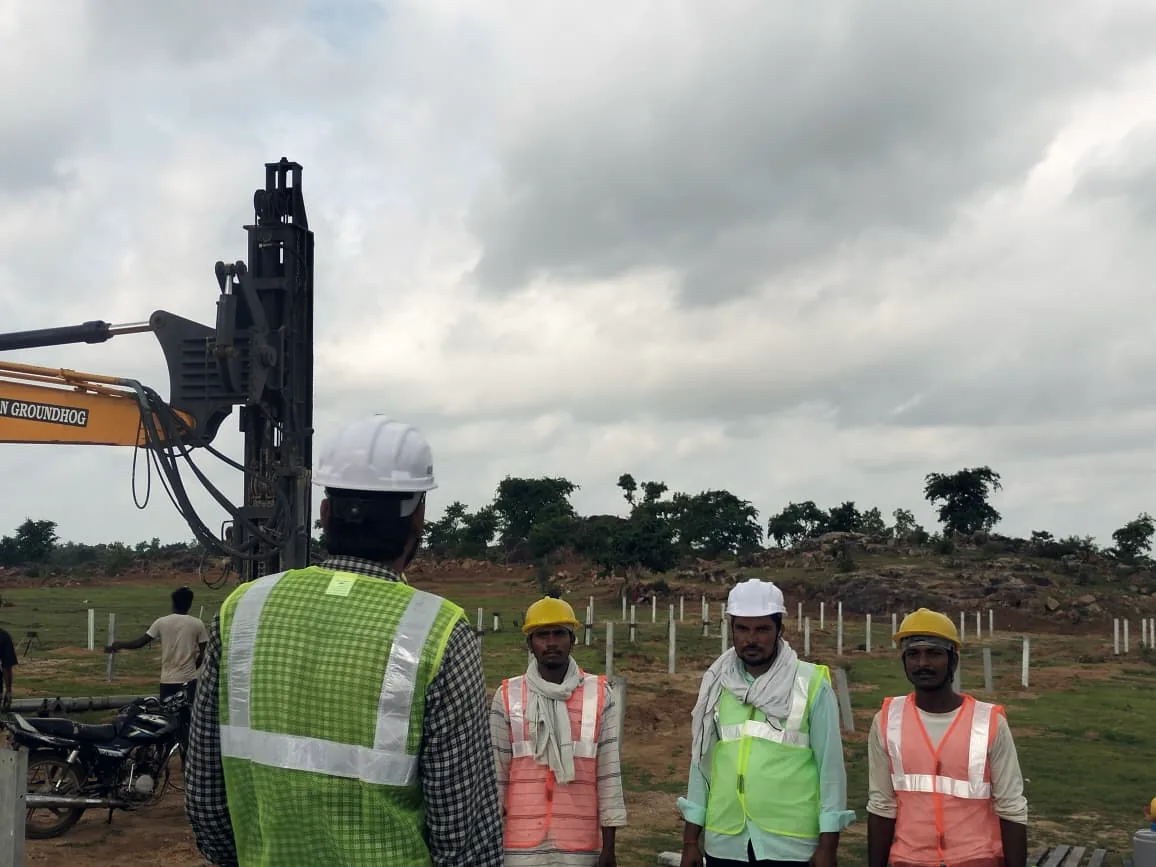
We do the civil work ourselves.
Piling, foundations and mounting structure are where a ground-mount plant is won or lost. These are our own crews on our own sites.
03 How it goes
Six stages, each with a document at the end of it.
Load and tariff study
We read your consumption profile and your tariff structure. A plant sized to peak demand and one sized to average demand are different plants with different economics.
Site and structural assessment
Roof capacity and condition, or ground conditions and soil for a piled foundation. This is where we find the problems, not halfway through the build.
Engineering and proposal
Single-line diagram, layout, component schedule and an itemised commercial proposal.
Approvals and construction
Sanctions and DISCOM approvals, then the build — foundations, structure, array, wiring, protection.
Commissioning and handover
Testing, grid synchronisation, and a documented handover with as-built drawings.
Operations and maintenance
Monitoring, scheduled cleaning and fault response under an O&M agreement.
Send us a bill and a site address.
That is enough to start. We will tell you whether solar makes sense for your load before anyone visits.